Saudi Arabia’s Rare Snowfall Event
Conversation with Gemini
Saudi Arabia witnesses rare snowfall for first time in 30 years
In an extraordinary meteorological event, Saudi Arabia has witnessed rare and heavy snowfall across several regions in December 2024, with many reports describing it as a “historic occurrence” not seen on this scale in approximately 30 years.
While some high-altitude northern areas like Tabuk occasionally see light dustings of snow, the current weather system has blanketed a much wider area, including central regions and low-lying desert dunes that typically remain arid year-round.
Key Highlights of the Event
Affected Regions: The snowfall was most prominent in the northern provinces of Tabuk (specifically the Jabal Al-Lawz mountains) and Al-Jawf. Surprisingly, it also reached parts of Hail and areas north of Riyadh, such as Al-Majmaah and Al-Ghat.
+1
Weather Conditions: Temperatures in the affected highlands plummeted to as low as −4
∘
C (24.8
∘
F). The snow was driven by a powerful cold air mass moving south from the Mediterranean, colliding with moisture-rich clouds.
+1
Public Reaction: Social media has been flooded with surreal images of camels standing in snow-covered dunes and residents participating in winter activities like skiing and sledding in the desert.
Why is it Snowing in the Desert?
Meteorologists attribute this event to a specific combination of atmospheric conditions:
Cold Air Intrusion: A strong low-pressure system brought a mass of polar air from Europe and the Mediterranean down into the Arabian Peninsula.
The “Warming Paradox”: Some climate experts suggest that as the region warms, the atmosphere can hold more moisture. When a rare cold front hits this moisture-heavy air, it can trigger intense and unusual precipitation, such as heavy snow or hail, rather than typical light rain.
+1
Elevation: High-altitude areas like Jabal Al-Law (2,580 meters) act as a natural trap for these cold systems, allowing snow to settle.
Safety and Warnings
The Saudi National Center for Meteorology (NCM) has issued red and orange alerts across several provinces. Authorities have warned of:
Flash Flooding: In areas where the snow is accompanied by heavy rain.
Icy Roads: Hazardous driving conditions in northern and central regions.
Visibility Issues: Thick fog and strong winds accompanying the cold front.
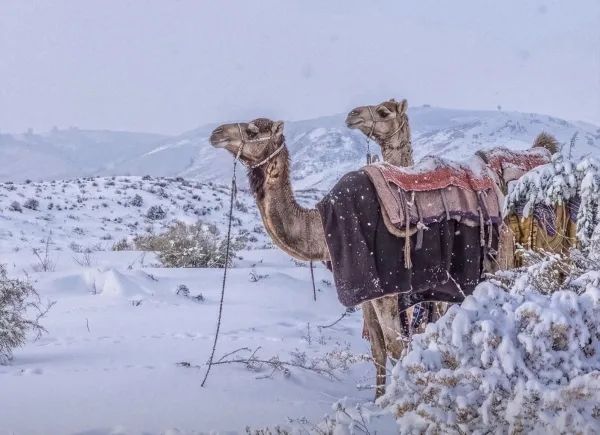

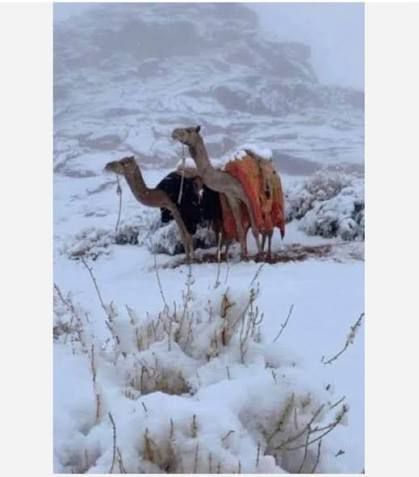
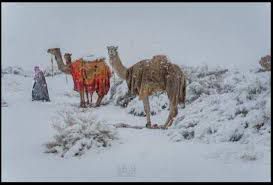
Snow has blanketed several regions across Saudi Arabia for the first time in 30 years, transforming the desert-framed mountains into a striking winter wonderland as inclement weather made its presence felt
A cold air mass brought rain and powerful winds, turning higher northern elevations into a snowy landscape. Near Tabuk, in areas like Jabal Al Lawz and the Trojena highlands, temperatures dropped to around -4°C, allowing snow to settle at altitudes near 2,600 metres.
As the snow fell in areas like Tabuk and Hail, the residents stepped out to ski and enjoy the icy scenes.
The rare event has sparked excitement and disbelief among residents who have shared videos and photos of the kingdom blanketed in white.
Snowfall transformed parts of the country into an unexpected winter playground.
A video shared on X captured an unusual scene of a group of camels standing in desert area covered in snow, with dark clouds looming overhead, has gone viral.
Another video showed adults enjoying skiing in the snow, celebrating and capturing a scene rarely seen in the Kingdom.

 sports and news
Leave a comment